No. 11 Yunhe Street was known as koteicho 204‐6 during the Japanese colonial period. Tomita Yoshisuke, an instructor at Taihoku Higher School, obtained its land ownership in April 1932. The building was likely part of the site at the time of this acquisition. The long central corridor was a middle class imitation of the upper class fusion of Japanese and Western houses, a typical feature of residences at the time.
In 1945, Taiwan Province Public Property Office of the R.O.C. government took over properties from Japan, and the Liang Shih‐Chiu House was among the transferred items. In 1985, NTNU became the managing institution of the House, and the House is now operated by the NTNU Library. The House became a registered historical building in 2004, and a survey was conducted in 2007. From 2010 to 2011, the House underwent restoration.

Tomita was from Yamaguchi Prefecture, Japan. He graduated from the English Department of Tokyo Higher Normal School and the English Department of the Humanities College of Kyoto Imperial University. He became a lecturer at Doshisha University, an instructor at Kagojima Middle School in Saga Prefecture, and a professor at the Sixth Higher School. In April 1922, he came to Taiwan as Instructor of English at the Taihoku Higher School, and left in March 1935 due to illness. He then became a professor at Kitakyushu Foreign Language University.
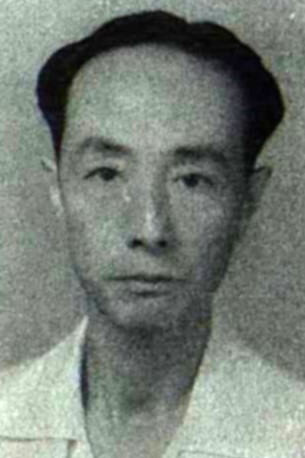
Chang was from Hebei, China, and graduated from Tohoku Imperial University, Japan. He was a professor at Peking Private Chinese University and National Peking Temporary University. He was a department chair and a professor at the Humanities College of Canton University. He was hired as Chair and Professor of Mathematics, as well as Chair of the Mathematics Training Course at Taiwan Provincial Teachers College (former name of NTNU). He died of illness in 1951.
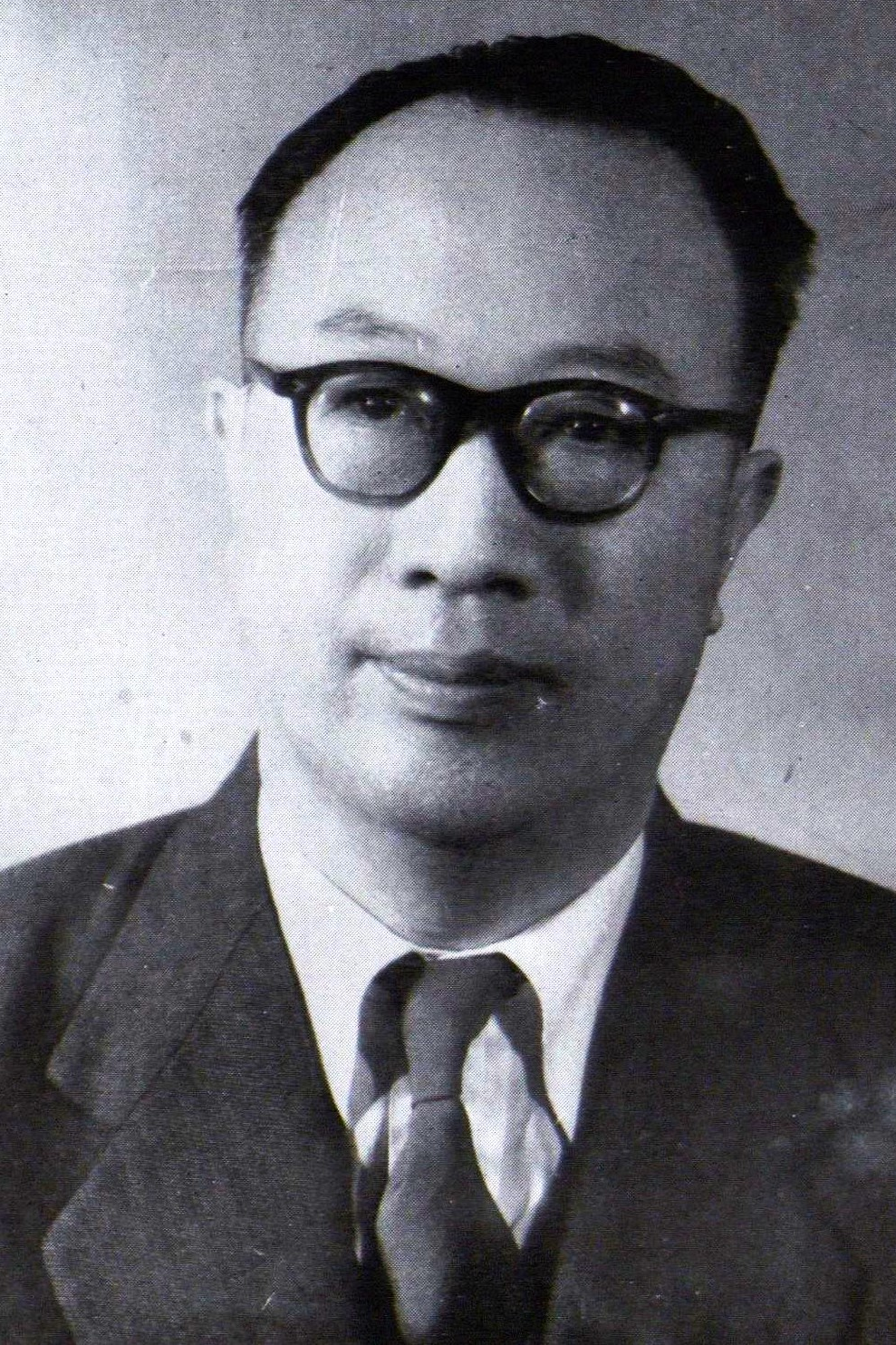
Liang was from Qiantang County in Zhejiang, China. He graduated from the Colorado College, USA, and taught at Southeast University, Qingdao University and Peking University. He was hired as Chair of the English Department of Taiwan Provincial Teachers College in 1949. In 1952, he moved from No. 1 Dehui Street to No. 11 Yunhe Street, and he moved again in 1959 to Andong Street Lane 309 (known today as Ruian Street Lane 23). He retired from NTNU in 1966, and passed away in 1987.

Ning was from Hebei, China, and graduated from Tohoku Imperial University, Japan. He succeeded Liang Shih‐Chiu as Chair of the English Department at NTNU in 1959. While supervising overseas Chinese students in August 1964, he died of a sudden heart attack.
Liang was a Professor of English and the Dean of the College of Liberal Arts at the NTNU from 1949 to 1966. As is expected of all professors, he delivered lectures, did administrative work, and engaged in scholarly research. As if that was not enough, he returned home to compile dictionaries to make a living. He founded the English department at NTNU, and established the English Language Training Center and the Mandarin Training Center, making NTNU a leading institution for research on English literature, English language education and Chinese language learning.

Liang Shih‐Chiu’s bilingual training can be traced to his primary education. Liang’s father was among the first students of Tongwen Guan, where he was taught foreign languages and studied in the style of the New Education. In 1912, the father enrolled Liang Shih‐Chiu at Peking Public Third Elementary School, where he began learning to spell in English.
In 1915, Liang Shih‐Chiu was admitted to the Tsing Hua Academy to prepare him for study in the United States. American textbooks were used in the morning lessons, which were taught in English by American teachers with the help of Chinese staff with English ability. The subjects covered included American Civics, History of the West, Physics, Politics and Sociology. Lessons in the afternoon were taught in Chinese with Chinese textbooks by Chinese teachers for subjects such as Chinese, History, Geography, Morality, and Philosophy.
In a 1955 letter to university president Liu Chen, Liang proposed reforming English language teaching methods and attached a plan to improve English language education. This plan was a catalyst for Taiwan Provincial Normal University (NTNU) and the Asia Foundation to reform English language teaching using linguistic science in order to improve the listening, speaking and writing ability of students of English. By the autumn of 1955, an English Language Training Center was established.
Students were selected from the freshman class of the English Department to be trained at the Center. The faculty included noted professors from NTNU’s English Department, such as Lin Yu‐k’eng, Lu Hsiao‐tung, and Fu Yi‐chin; the Asia Foundation also sent four specialists from the United States: Dr. Norman Jacobs, Mr. Edward Conyngham, Mr. Harry J. Lamley, and Mr. Donald Arthur Gibbs. The Center was shut down when funding for the project ended in 1962. Nevertheless, the teaching methods that were developed out of this collaboration continue to be used in NTNU’s English Department, contributing immensely to the training of English teachers.


In 1955, Taiwan Provincial Normal College was restructured as Taiwan Provincial Normal University. In addition to the establishment of the English Language Training Center, a Graduate School of English was also in the works. To train more specialists, in 1956, the Ministry of Education approved the University’s plan to establish a Graduate School of English and a Graduate School of Chinese. Liang Shih‐Chiu was to head the Graduate School of English. This graduate school would be Taiwan’s first institution devoted to research on English language. With support from the board of the China Foundation for the Promotion of Education of Culture, it received funding for four scholarship placements, as well as a bursary for graduate students. Under Liang Shih‐Chiu’s direction, NTNU’s Mandarin Training Center was also established in 1956.


Liang Shih‐Chiu retired from NTNU in 1966, and in April 1970, he went to visit his daughter Liang Wen‐chiang in Seattle with his wife. They stayed there for four months before returning to Taiwan to write Seattle Miscellanea, documenting the difficulty of going abroad under martial law regulations, their travels through different parts of the U.S., and the wonderful experience shared among the three generations of his family. In 1972, he moved to live with his daughter in Seattle. Unfortunately, an accident in 1974 killed his wife Cheng Chi‐Shu, and Seattle became a place of grief. He wrote Huaiyuan Mengyi to commemorate her life.


After Cheng Chi‐Shu’s death in 1974, Liang met Han Ching‐Ching. His emotional journey is witnessed in five selected letters between Liang and his long‐term colleague Chen Hsiu‐Ying.
Chen Hsiu‐Ying: Associate Professor of English at NTNU. She entered NTNU as an English major in 1958 and helped Liang Shih‐Chiu compile his English‐Chinese dictionary. After graduating in 1964, she became a teaching assistant at the Graduate School of English. She was under the care of Liang, and they have a relationship akin to that of a father and daughter.


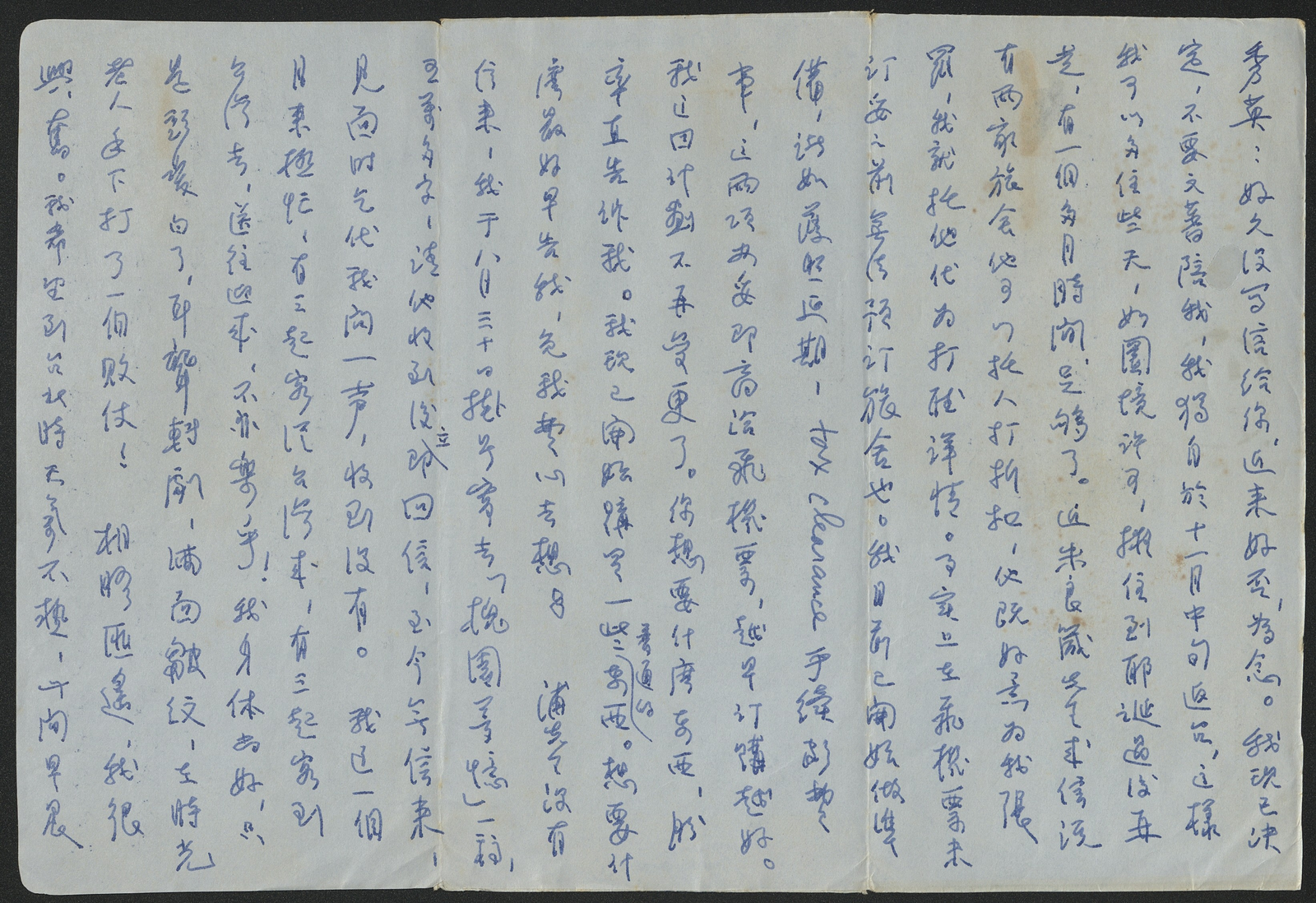


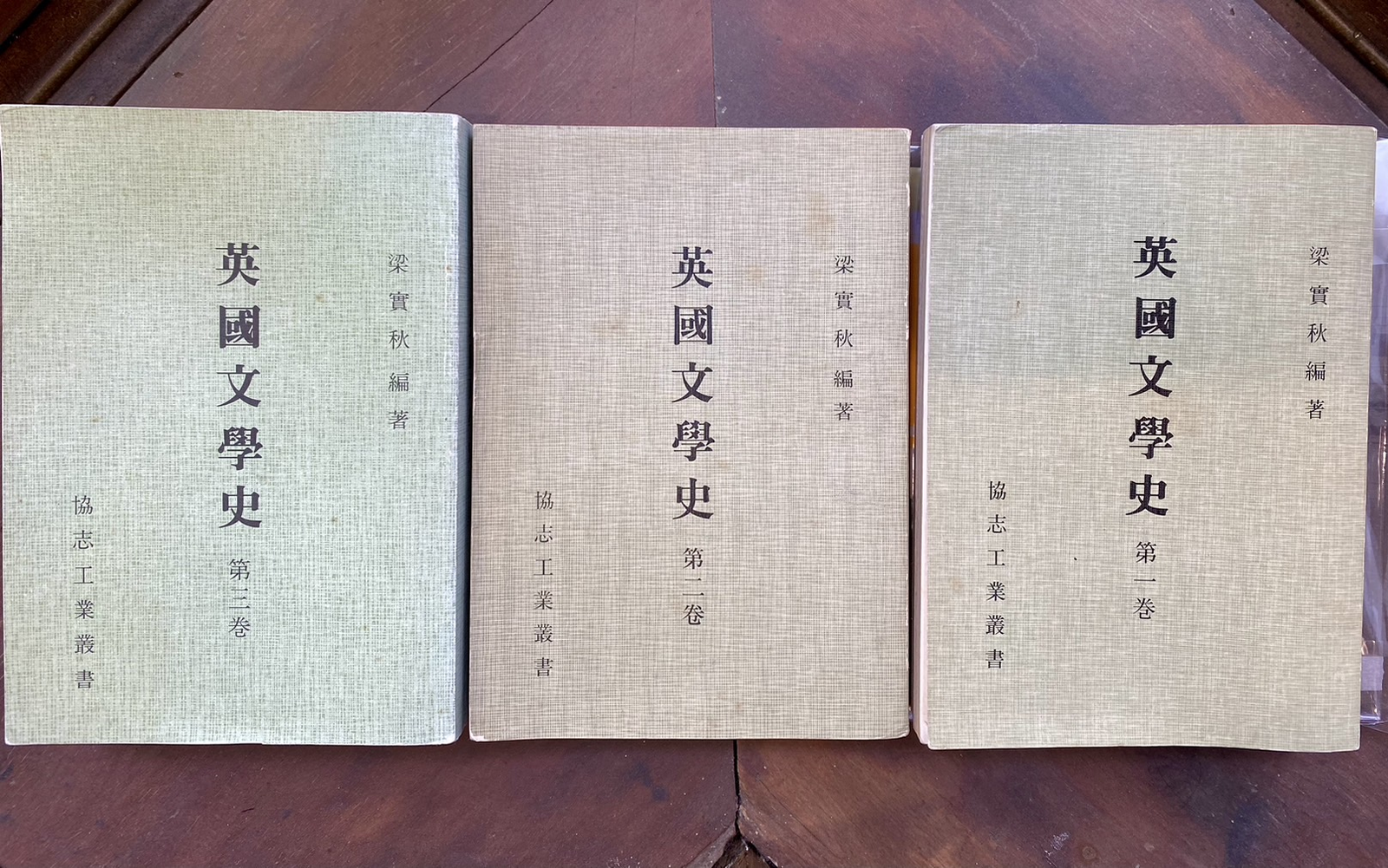
After Liang Shih‐Chiu returned to Taiwan and met Han Ching‐Ching (1931‐1994), he wrote thousands of love letters, and their romance caused a sensation. Impervious to gossip, Liang married Han on May 9th, 1974, and welcomed a new member to their family, Prince Baimao. He completed two major scholarly volumes in his twilight years, which earned him Taiwan’s National Award for Contribution to the Arts. Completed in seven years, A History of English Literature consisted of around one million Chinese characters, and An Anthology of English Literature was about 1.2 million characters in length.


In Liang Shih‐Chiu’s diary entry for March 30, 1978, he writes, “Ching‐ching brought home a kitten, and from this point on there would be mischief at home.” On Prince Baimao’s birthday, Liang would always write a commemorative essay about his love for the cat to be shared with fellow cat lovers. His daughter Liang Wenchiang once wrote, “Sometimes, I get confused as to who is the owner and who is the pet,” but appreciates the companionship Prince Baimao’s brings to her father, since “he did what I couldn’t do.”


After he finished translating Shakespeare, the retired Liang Shih‐Chiu began compiling his lecture notes into A History of English Literature. This was mentioned in a letter he sent to his daughter in 1969. However, the project was postponed due to his move to the United States, the death of Cheng Chi‐Shu, and his remarriage to Han Ching‐ching. A History of English Literature and An Anthology of English Literature were finally completed in 1979, and both works were published by Hsieh Chih Industrial Library Publishing Company in 1985.